Cultural Arts Program (CAP)
Ifetayo’s flagship Performing Arts Academy
The Cultural Arts Program (CAP) is a comprehensive and sequential arts instruction program offering yearlong Saturday classes to students ages 2-18 in a range of art forms that is open to all.
These classes teach students fundamental skills in dance, music, theater, visual arts and martial arts to provide them with an avenue for creative expression and a vehicle for self knowledge.
Our Enrichment Offerrings
Cultural Arts Programs
The Cultural Arts Program (CAP) is a comprehensive and sequential arts instruction program offering yearlong classes to students ages 2-18 in a range of art forms that is open to all. These classes teach students fundamental skills in dance, music, theater, visual arts and martial arts to provide them with an avenue for creative expression and a vehicle for self knowledge.
Class by Level
Toddler Classes (2-5yo)
Foundation Classes (6-9yo)
Mixed Level Classes (Foundation + Beginner 7-15yo)
Beginner Classes (10-15yo)
Open Level Classes (Intergenerations: Children and Adults 7-99)
Dance
African Dance
Location
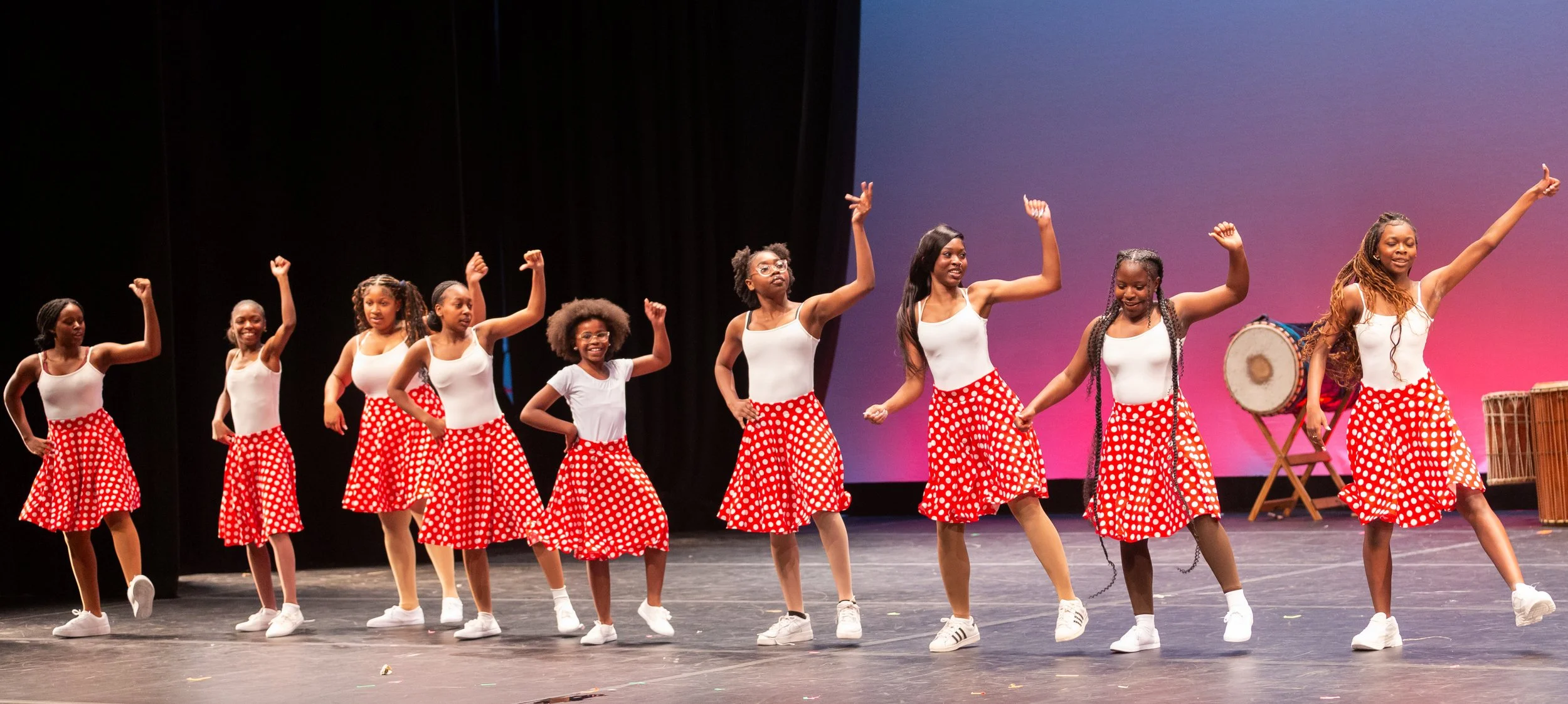
In African Dance classes, students gain a basic understanding of African tradition and its cultural significance. Students learn common West African movement vocabulary within Djembe, Sabar, Kutiro, and Ivoirian (Cote d’Ivoire) dances while also learning to isolate specific body parts in polyrhythmic musical patterns as they interact with live drumming accompaniment. They practice applying African percussive elements such as call-and-response and the break as they also learn movement combinations and choreography.
Afro Modern
Community Center
This dance style combines traditional African dance with Western contemporary techniques found in modern dance. It bridges the gap between traditional African dance, rooted in cultural rituals and meaning, and dance techniques of Western culture. This dance style blends techniques from multiple genres, including classical ballet, jazz, modern and lyrical dance.
Ballet
Various Locations
In Ballet classes, students learn all basic ballet positions while synchronizing and interpreting ballet movement vocabulary and combinations. Students become more spatially aware of their individual placement in relation to other dancers in ensemble work, at the barre. and/or with floor-barre techniques while simultaneously learning to strengthen their own core. All students gain a better sense of ballet’s cultural relevancy through the use of common ballet vocabulary terms. within the general field of dance.
Hip Hop
Various Locations
In Hip Hop Dance, students learn to identify, understand, and appreciate the cultural significance of the dance genre as well as Hip Hop culture. Through muscle isolations, flexibility, and fluidity, students gain knowledge of the techniques of a Hip Hop dancer by building their own skills of self-expression, spatial awareness, musicality, and stage presence. Students also build their own style of uniqueness and finesse as they exhibit an understanding of Hip Hop’s technical vocabulary including Boogaloo, Funk, Breaking, Popping, Locking, Krumping, Turfing, House and Freestyle, thus developing increased self-confidence as performers.
Music
Chorus
Headquarters
In the Ifetayo Chorus, students are introduced to methods that strengthen, preserve, and improve the first instrument: the human voice. Students develop ear training, practice breath control, and learn exercises such as scales, tongue twisters, harmonization, and warm-up songs to prepare to use their voice in choral, small ensemble, and solo performance scenarios. Students also begin to build their vocal repertoire by researching legendary vocalists and recording artists of African descent throughout the diaspora and by analyzing their vocal techniques and performance. All students interested in theater, public speaking, debate & recitation, and vocal music are highly encouraged to take vocal class.
African Drum
Remote
Students in Djembe Orchestra learn to identify the cultural relevance of the traditional and internationally recognized West African djembe drum orchestra and all of its components. By tuning their ears to the role of each drum in the orchestra (i.e djembe, songba, kinkini, and dundun), students begin to identify regional rhythms & songs as they consistently practice African percussive elements such as call-and-response and the break. With directed interaction, developed hand placement skills, and a command of complex timing patterns, advanced students enjoy the developing skills to accompany dance classes and interact with student dancers during the choreographic process.
Martial Arts
Capoeira
On-site
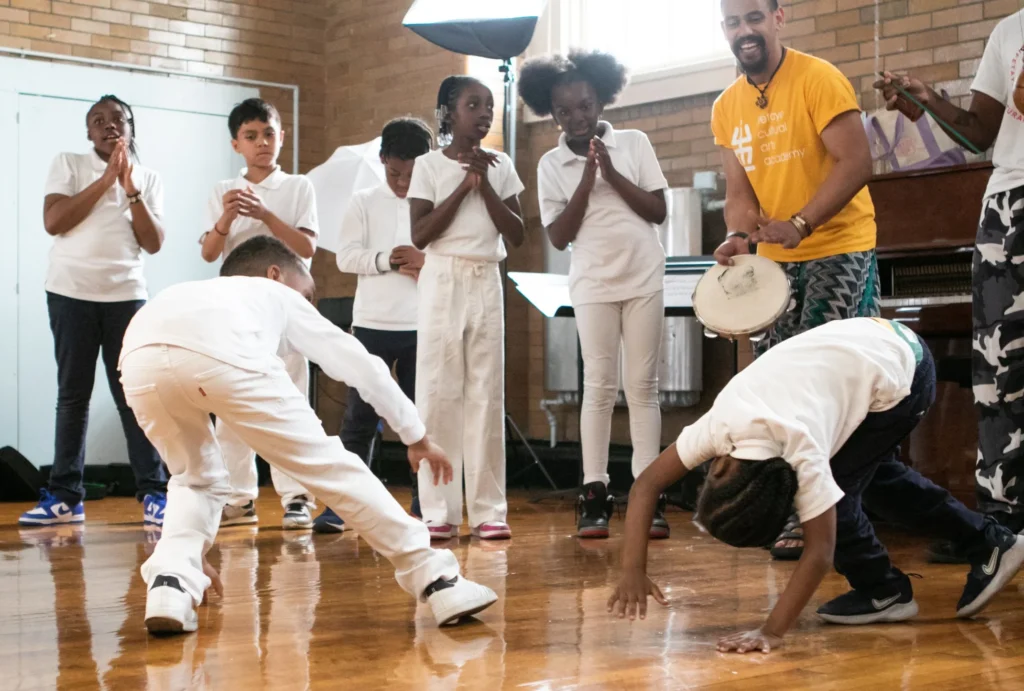
Capoeira is the Brazilian martial art that teaches students to resist, defend, dance, and play all at the same time. Students learn commands and songs in Brazilian Portuguese and become comfortable with the instruments and visual culture of rotating between watching, singing, and playing. They also develop confidence, agility, and skill as they do acrobatics at varying speeds while interacting with classmates. Toddlers and beginner-level students become more spatially aware of their surroundings while more advanced students accomplish more physically challenging maneuvers within smaller spaces while learning about Capoeira’s rich history of Afro-Brazilian culture.
Visual Arts
Remote
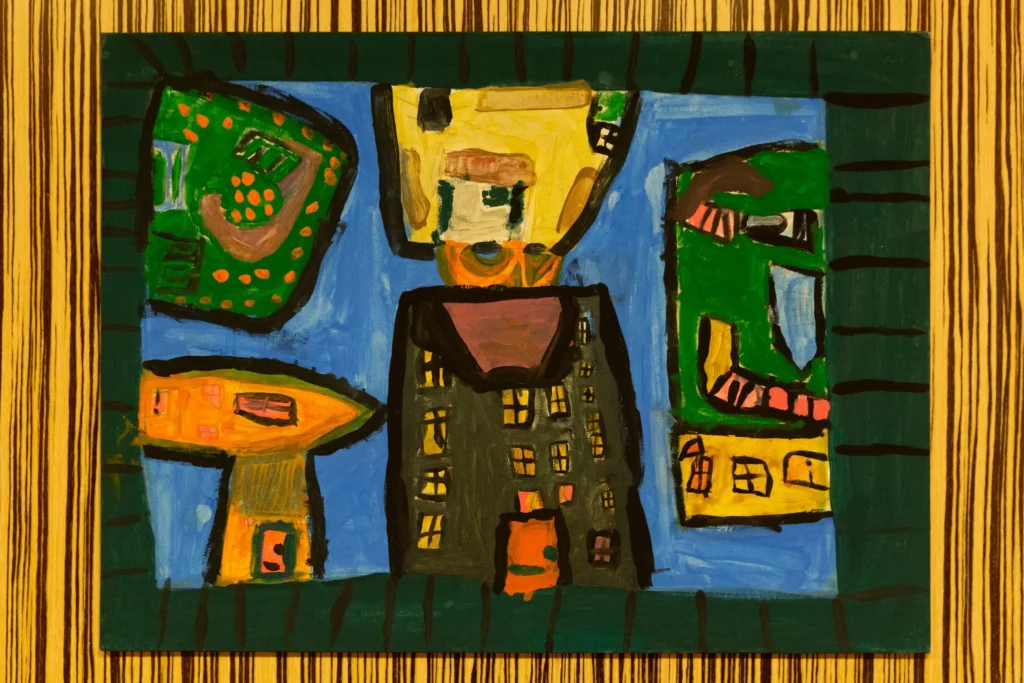
Students in Painting, Sketching, and Drawing are drawn into the world of visual expression and introduced to a myriad of ways to use their eyes to interpret what they see around them on a blank canvas. Students will learn principles of both traditional and contemporary African art as they analyze the work of famous artists of African descent and their contribution to the world of visual art as a whole. The student artists will explore visual elements (patterns & texture, color, line, shape, space) to create their own works as they make expressive connections between self, nature, and creativity.
Program
location
Lorem ipsum dolor sit amet, consectetur adipiscing elit. Suspendisse varius enim in eros elementum tristique. Duis cursus, mi quis viverra ornare, eros dolor interdum nulla, ut commodo diam libero vitae erat. Aenean faucibus nibh et justo cursus id rutrum lorem imperdiet. Nunc ut sem vitae risus tristique posuere.
Theater
Toddler Creative Expressions (Ages 2-5)
Remote
Through exposure to multiple arts disciplines, scholars learn to use songs, movement, storytelling, and visual arts to express themselves as young artists. With the support of our expert faculty, and a little help from parents and guardians, the classroom becomes a communal space where toddlers use visual and performance art as vehicles to improve speech coordination, develop fine motor skills, and refine their ability to independently connect and socially engage with their peers. This class is especially beneficial for toddlers who struggle with separation, or need extra support transitioning into classroom spaces.
Foundations (Ages 6 - 9)
Remote
In this acting class, scholars cultivate technical skills and an appreciation for acting as an instrument for educating, entertaining and “voicing” culture. Using published works within the diaspora, scholars learn characterization through dramatic and comedic portrayals. At the foundation level, scholars are introduced to basic stage and performance terminology and begin cultivating their personal stage voice, stage presence, and overall stage etiquette under the guidance of experienced theater professionals.
Beginner (Ages 10 - 14)
Remote
Scholars build on foundational theater training and refine technical skills in an ensemble environment. At this level, scholars develop a functional understanding of stage design and lighting, refine the use of vocal skills and nonverbal communication, and develop their sense of proprioception to create stage blocking. Our young performers also study and memorize scenes, monologues and poetry to understand plot, action, and conflict as they continue to develop their character building skills.
Acting / Devised Theater
Remote
Here, students cultivate technical and expressive skills of the acting process. They learn to tell their own stories and create characters from published works relevant to the Diaspora while developing their stage presence, expressive voice, and at all levels learn to identify basic stage and performance terminology. They develop the ability to engage active listening while cultivating authentic responses. Students become co-creators and writers of their own works which culminates in public presentations. Other areas covered in the course include performance poetry. Students interested in theater, spoken word, public speaking, debate & recitation, and vocal music are highly encouraged to take acting/devised theater.
Class by Department
CAP Mini Program
CAP+ Program
FAQ's
General Questions
Some of our Frquently asked question dealing with payment fees ane processing. Before you registeredplease be advised to read our FAQ’s isus tristique posuere.
Fees*
Do I have to pay fees for all programs
Cash, Check and Merch
Do I have to pay fees for all programs?
Yes, there is one time registration fee of $85 per student. Registration fee is paid once a year at the start of the new season and includes all on site programs.
Do I have to pay for all programs
Do I have to pay for all programs
Catergory Fees:
Catergory Fees:
Yes, there is one time registration fee of $85 per student. Registration fee is paid once a year at the start of the new season and includes all on site programs.
What does the registration fee cover?
Various Locations
The registration fee covers the enrollment fee, PTC Scholar Care Fee, and Ifetayo T-shirt.
What about uniforms?
Various Locations
Uniform items are listed for each class. All families will receive a uniform order sheet via the parent portal on August 15. The cost per item is included in the order sheet.
My child turns 6 or 10 years old in the fall; can I register them for the age-appropriate class?
Various Locations
Scholars are allowed to register for the age-appropriate class as long as they turn 6 or 10 years old by 12/31/2026.
Can I pay in cash or check?
Various Locations
Tuition and registration payments are collected via e-payment directly through Jackrabbit, our new classroom management software.
For our special events, classes, and select merchandise, we use a mixture of Eventbrite, Jackrabbit, and/or Square. WE DO NOT ACCEPT PAYMENTS VIA CASH, CHECKS, CASHAPP, VENMO, ZELLE, OR APPLE PAY.
Does Ifetayo offer scholarships?
Various Locations
Currently, we do not have a general scholarship fund in place. However, if a family is experiencing financial hardship, please email the Cultural Arts Program Director at cdaninthe@ifetayo.org to discuss potential solutions.
Can I register for Fall or Spring classes only?
Various Locations
No, we are resuming our full year model as prior to the COVID-19 pandemic. Families may register through January 16, 2027, as class capacity allows.
Payment Schedule
Toddler Creative Expressions (Ages 2-5)
Remote
Through exposure to multiple arts disciplines, scholars learn to use songs, movement, storytelling, and visual arts to express themselves as young artists. With the support of our expert faculty, and a little help from parents and guardians, the classroom becomes a communal space where toddlers use visual and performance art as vehicles to improve speech coordination, develop fine motor skills, and refine their ability to independently connect and socially engage with their peers. This class is especially beneficial for toddlers who struggle with separation, or need extra support transitioning into classroom spaces.
Foundations (Ages 6 - 9)
Remote
In this acting class, scholars cultivate technical skills and an appreciation for acting as an instrument for educating, entertaining and “voicing” culture. Using published works within the diaspora, scholars learn characterization through dramatic and comedic portrayals. At the foundation level, scholars are introduced to basic stage and performance terminology and begin cultivating their personal stage voice, stage presence, and overall stage etiquette under the guidance of experienced theater professionals.
Beginner (Ages 10 - 14)
Remote
Scholars build on foundational theater training and refine technical skills in an ensemble environment. At this level, scholars develop a functional understanding of stage design and lighting, refine the use of vocal skills and nonverbal communication, and develop their sense of proprioception to create stage blocking. Our young performers also study and memorize scenes, monologues and poetry to understand plot, action, and conflict as they continue to develop their character building skills.
Acting / Devised Theater
Remote
Here, students cultivate technical and expressive skills of the acting process. They learn to tell their own stories and create characters from published works relevant to the Diaspora while developing their stage presence, expressive voice, and at all levels learn to identify basic stage and performance terminology. They develop the ability to engage active listening while cultivating authentic responses. Students become co-creators and writers of their own works which culminates in public presentations. Other areas covered in the course include performance poetry. Students interested in theater, spoken word, public speaking, debate & recitation, and vocal music are highly encouraged to take acting/devised theater.
Discounts and Savings
Capoeira
On-site
Capoeira is the Brazilian martial art that teaches students to resist, defend, dance, and play all at the same time. Students learn commands and songs in Brazilian Portuguese and become comfortable with the instruments and visual culture of rotating between watching, singing, and playing. They also develop confidence, agility, and skill as they do acrobatics at varying speeds while interacting with classmates. Toddlers and beginner-level students become more spatially aware of their surroundings while more advanced students accomplish more physically challenging maneuvers within smaller spaces while learning about Capoeira’s rich history of Afro-Brazilian culture.
Visual Arts
Remote
Students in Painting, Sketching, and Drawing are drawn into the world of visual expression and introduced to a myriad of ways to use their eyes to interpret what they see around them on a blank canvas. Students will learn principles of both traditional and contemporary African art as they analyze the work of famous artists of African descent and their contribution to the world of visual art as a whole. The student artists will explore visual elements (patterns & texture, color, line, shape, space) to create their own works as they make expressive connections between self, nature, and creativity.
Program
location
Lorem ipsum dolor sit amet, consectetur adipiscing elit. Suspendisse varius enim in eros elementum tristique. Duis cursus, mi quis viverra ornare, eros dolor interdum nulla, ut commodo diam libero vitae erat. Aenean faucibus nibh et justo cursus id rutrum lorem imperdiet. Nunc ut sem vitae risus tristique posuere.
Uniforms
Chorus
Headquarters
In the Ifetayo Chorus, students are introduced to methods that strengthen, preserve, and improve the first instrument: the human voice. Students develop ear training, practice breath control, and learn exercises such as scales, tongue twisters, harmonization, and warm-up songs to prepare to use their voice in choral, small ensemble, and solo performance scenarios. Students also begin to build their vocal repertoire by researching legendary vocalists and recording artists of African descent throughout the diaspora and by analyzing their vocal techniques and performance. All students interested in theater, public speaking, debate & recitation, and vocal music are highly encouraged to take vocal class.
African Drum
Remote
Students in Djembe Orchestra learn to identify the cultural relevance of the traditional and internationally recognized West African djembe drum orchestra and all of its components. By tuning their ears to the role of each drum in the orchestra (i.e djembe, songba, kinkini, and dundun), students begin to identify regional rhythms & songs as they consistently practice African percussive elements such as call-and-response and the break. With directed interaction, developed hand placement skills, and a command of complex timing patterns, advanced students enjoy the developing skills to accompany dance classes and interact with student dancers during the choreographic process.
CAP Tiered Pricing Model
HOW TO CHOOSE YOUR LEVEL
Our arts and culture program offers enriching classes for children ages 2-19. To accommodate different household needs, we have structured our pricing into three affordable levels. Each level covers 33 weeks of instruction.
Assess Your Financial Situation: Consider your household income, number of dependents, and overall financial commitments.
Community Support: If your financial situation allows, opting for a higher level helps support families in need and ensures the program’s continued operation.
Contact Us for Guidance: If you’re unsure which level is best for your situation, please reach out to the CAP program director at cdaninthe@ifetayo.org. We are here to help and can provide guidance based on your unique circumstances.
By structuring our program this way, we aim to be inclusive and supportive, ensuring that every child has the opportunity to benefit from arts and culture education.
Tier 1
Price: $675 per class
This level is for families who are managing their basic household needs with little to no room for extra expenses or savings. We aim to ensure that every child has the opportunity to participate, regardless of financial constraints.
Ideal for:
Families who are able to cover their essential needs but have limited extra funds.
Households with multiple children and significant financial obligations.
Single-parent households or families experiencing temporary financial hardship.
Statement: “I can meet my household needs but have little to no room for extra expenses or savings.”
Tier 2
Price: $725 per class
This level is designed for families who can comfortably meet their household needs and have some additional funds for extracurricular activities. It balances affordability while contributing to the program’s sustainability.
Ideal for:
Dual-income households with moderate expenses.
Families who can allocate a portion of their budget to educational and cultural activities.
Households that prioritize spending on enrichment activities for their children.
Statement: “I can comfortably meet my household needs with some additional funds for extracurricular activities.”
Ideal for:
Families who are able to cover their essential needs but have limited extra funds.
Households with multiple children and significant financial obligations.
Single-parent households or families experiencing temporary financial hardship.
Statement: “I can meet my household needs but have little to no room for extra expenses or savings.”
Tier 3
Price: $775 per class
This level is for families who can easily meet their household needs and have enough financial flexibility to support both their child’s activities and other discretionary expenses. By choosing this level, you help support the program and enable us to offer lower-priced levels to those in need.
Ideal for:
Families with higher disposable incomes.
Households looking to support community programs and ensure accessibility for all children.
Families committed to contributing to the sustainability and growth of arts and culture programs.
Statement: “I can easily meet my household needs and have the flexibility to cover additional discretionary expenses.”
Ideal for:
Dual-income households with moderate expenses.
Families who can allocate a portion of their budget to educational and cultural activities.
Households that prioritize spending on enrichment activities for their children.
Statement: “I can comfortably meet my household needs with some additional funds for extracurricular activities.”
Ideal for:
Families who are able to cover their essential needs but have limited extra funds.
Households with multiple children and significant financial obligations.
Single-parent households or families experiencing temporary financial hardship.
Statement: “I can meet my household needs but have little to no room for extra expenses or savings.”

Support Our Camp and Create Change
CULTURAL ARTS PROGRAM (CAP) TIERED PRICING MODEL
Our arts and culture program offers enriching classes for children ages 2-19. To accommodate different household needs, we have structured our pricing into three affordable levels. Each level covers 33 weeks of instruction.
TIER 1
Price: $675 per class
This level is for families who are managing their basic household needs with little to no room for extra expenses or savings. We aim to ensure that every child has the opportunity to participate, regardless of financial constraints.
Ideal for:
Families who are able to cover their essential needs but have limited extra funds.
Households with multiple children and significant financial obligations.
Single-parent households or families experiencing temporary financial hardship.
Statement: “I can meet my household needs but have little to no room for extra expenses or savings.”
TIER 2
Price: $725 per class
This level is designed for families who can comfortably meet their household needs and have some additional funds for extracurricular activities. It balances affordability while contributing to the program’s sustainability.
Ideal for:
Dual-income households with moderate expenses.
Families who can allocate a portion of their budget to educational and cultural activities.
Households that prioritize spending on enrichment activities for their children.
Statement: “I can comfortably meet my household needs with some additional funds for extracurricular activities.”
TIER 3
Price: $775 per class
This level is for families who can easily meet their household needs and have enough financial flexibility to support both their child’s activities and other discretionary expenses. By choosing this level, you help support the program and enable us to offer lower-priced levels to those in need.
Ideal for:
Families with higher disposable incomes.
Households looking to support community programs and ensure accessibility for all children.
Families committed to contributing to the sustainability and growth of arts and culture programs.
Statement: “I can easily meet my household needs and have the flexibility to cover additional discretionary expenses.”
HOW TO CHOOSE YOUR LEVEL
Assess Your Financial Situation: Consider your household income, number of dependents, and overall financial commitments.
Community Support: If your financial situation allows, opting for a higher level helps support families in need and ensures the program’s continued operation.
Contact Us for Guidance: If you’re unsure which level is best for your situation, please reach out to the CAP program director at cdaninthe@ifetayo.org. We are here to help and can provide guidance based on your unique circumstances.
By structuring our program this way, we aim to be inclusive and supportive, ensuring that every child has the opportunity to benefit from arts and culture education.
Stay Connected
Receive invitations to performances, cultural festivals, financial education, wellness experiences & more!
By clicking Join Us, you agree to our Terms and Conditions.
What Our CAP Students Say
Hear from our campers and parents about their experiences!